The first time I saw a full Japanese sleeve up close I practically forgot to breathe – the detail, the motion, the way a story wrapped around someone’s arm felt like a secret being told out loud. I kept thinking about how every scale and wave seemed to mean something bigger than itself, which is why I fell so hard for japanese sleeve tattoos with deep meaning.
I made this little collection because I wanted one place to stash the pieces that actually felt like they carried weight, not just pretty patterns. I’m speaking from experience – I taught myself to read koi symbolism and ended up changing my own design twice because the meaning mattered more than the look.
Below you’ll find 16 pins that showcase everything from dragons to pagodas – plus honest notes about how these ideas could fit into your next sleeve. Save the ones you love or send them to your artist.
These 16 Japanese Sleeve Tattoo Pins That Capture Deep Meaning
Knotted Dragon Motion
Okay, dragons are classic for a reason. This arm piece has movement that reads like a story about power and protection, which is exactly why japanese sleeve tattoos with deep meaning so often include dragons. If you want something that reads strong from a distance, this style nails it. I once sketched a tiny dragon to test placement – it changed the whole vibe.
Minimal Yin-Yang Boat
There’s a quietness to this black-and-white drawing that I adore. Balance is literally built into the image, and you could tuck that into a sleeve where you need negative space to breathe. I like how subtle meanings can anchor a bolder piece nearby without competing with it.
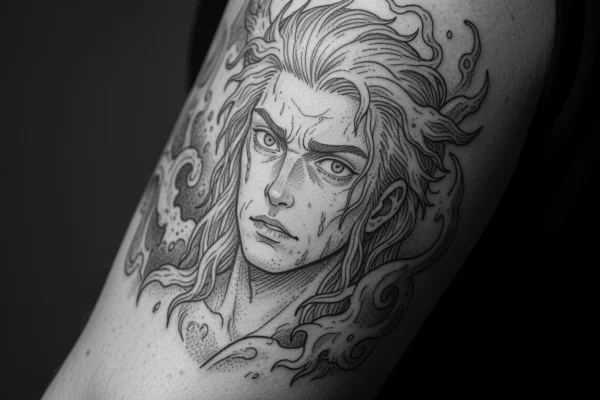
Soft Arm Portrait
This arm tattoo reads like a personal journal entry wrapped around skin. Consider placing a small portrait or figure like this near the elbow so it peeks out rather than shouting at every angle. You might be surprised how personal pieces feel more intimate when they’re not front-and-center.
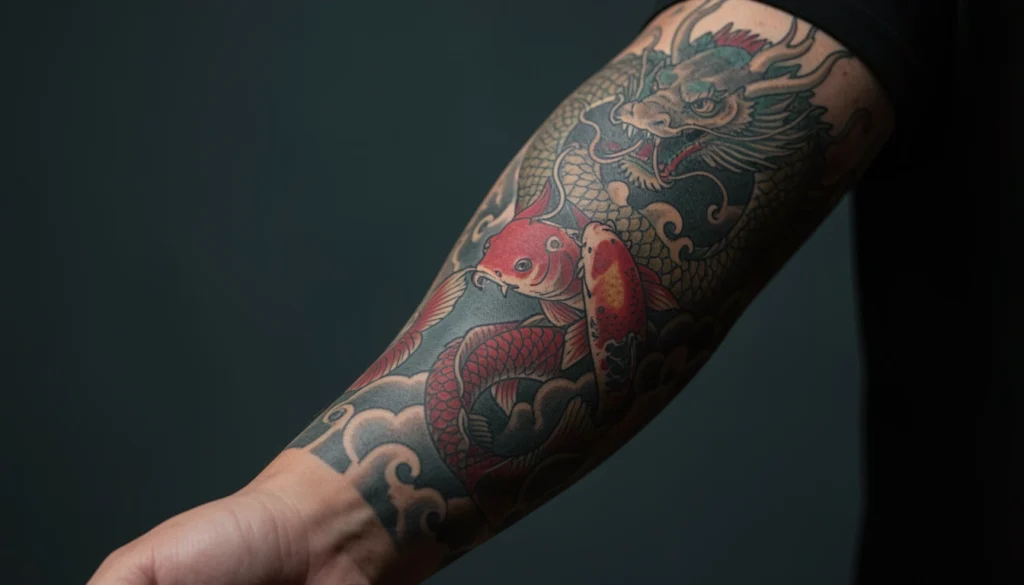
Traditional Dragon Coil
That traditional coil is pure movement and history. Many artists use similar dragons to symbolize courage or change, which is why so many japanese sleeve tattoos with deep meaning bring them into the mix. If you’re nervous about a full sleeve, try a dragon that wraps only halfway – then decide later if you want more.
Snake and Floral Sketch
Snakes paired with flowers balance danger and beauty in a way that feels very human. I always tell friends that mixing soft elements with sharp ones creates tension that keeps a sleeve interesting. Also, floral choices change the theme – chrysanthemums feel different than cherry blossoms, so pick intentionally.
Calligraphy Cover Art
Calligraphy or kanji can anchor a sleeve with direct meaning, but please get translations checked twice. This cover-art vibe is great for a bicep panel that reads like a heading across your arm. I made that translation mistake once – lesson learned, and now I triple-check with a native reader.
Gesture of the Hand
A hand reaching outward gives a narrative quality to a sleeve, like the wearer is offering or letting go. Position matters a lot here; when placed near the wrist it reads differently than on the shoulder. If you want a story-driven sleeve, consider small action poses like this one between larger motifs.
Clouds and Mountains
Landscape panels give a sleeve room to breathe and tell a scene. Mountains often symbolize perseverance, while clouds can hint at transition or mood. You could build a whole narrative from wrist to shoulder using sky and land as connective tissue – I actually used clouds to hide a previous tattoo once, so this works in real life.
Koi Contrast Pair
Koi fish are probably the most literal example of japanese sleeve tattoos with deep meaning – they represent perseverance, luck, and transformation. This black-and-red pairing feels balanced and symbolic without being overdone. If you’re chasing a meaningful sleeve, koi make a reliable centerpiece.
Pagoda Stroll Scene
A tiny scene with people and a pagoda can feel cinematic when wrapped into a sleeve. I picture this as a lower-arm vignette that invites closer inspection. If you want to tell a life moment visually, this type of small-story panel is a beautiful option.
Botanical Ink Wash
Ink-style florals have a softness that pairs well with heavier elements like dragons or waves. You could scatter these motifs to soften transitions between bold pieces. I keep coming back to floral inks when I want a sleeve that reads delicate from across the room but holds detail up close.
Subtle Arm Figure
This one feels personal without screaming for attention. A small figure tucked into negative space can be a nod to introspection. You might hide initials or a tiny symbol near the figure for a private layer of meaning.
Mixed Limb Composition
Seeing both arm and leg together makes me think of full-body storytelling – like a wraparound memoir. If you’re considering a sleeve that ties into other pieces, plan the flows now so motifs meet naturally at the elbow or shoulder. Trust me, planning saves a lot of awkward gaps later.
Portrait Against Gray
A strong shoulder portrait can anchor an entire sleeve and provide a focal point for surrounding symbolism. Different shading styles change the emotional tone, so decide upfront if you want realism or more graphic contrast. I had an artist suggest subtle gray washes and it softened a previously harsh look.
Wave and Surfer Sketch
Motion in a sleeve is everything, and surf scenes bring kinetic energy into a design. You could translate this into waves wrapping the arm with a small figure riding the crest. Wait, actually… that tiny surfer could be a silhouette of someone you love for a private touch.
Balanced Sleeve Fragment
This last one shows how varied elements can still feel cohesive when tonal choices are consistent. If unity is your goal, pick a limited palette or line weight and stick with it across panels. You will thank yourself during touch-ups and when photographing the finished sleeve.
How to Actually Make This Work For You
Start by defining the story you want your sleeve to tell – a few single words like “resilience,” “home,” or “rebirth” will help you and your artist choose motifs that actually fit together. Next, gather reference images (these pins are a great start) and mark what you like about each – color, movement, placement, or mood. When you meet your artist, talk through connections between pieces so negative space, flow, and symbolism feel intentional and not accidental; schedule touch-up and expansion sessions upfront because sleeves evolve and that’s part of the process.
Frequently Asked Questions
Think about the feelings or milestones you want to represent and then match them to traditional symbols like koi, dragons, blossoms or pagodas. Bring a few images to your artist so they can help combine those ideas into a flowing sleeve.
Color isn’t required – black-and-gray work wonderfully for solemn or classical themes, while selective color can emphasize key symbols. Decide on mood first, then choose color to support it.
Yes, you can, but keep a consistent style or palette so everything reads as one piece. Your artist can suggest transitions and filler elements to blend the styles naturally.
Gather reference images, write a short list of themes you care about, and be honest about placement and pain tolerance. Ask about the artist’s experience with Japanese motifs and request a mockup or stencil before booking.
Thanks for sticking with me through these pins – I hope you found a few ideas that actually feel like your story, because that’s what japanese sleeve tattoos with deep meaning should do. Save the ones that tug at you, and if a friend is getting inked, send this their way so you can co-plan (tattoo road trip?). If you want, tell me which image you loved most – I’d genuinely like to know.